Everyday style
Capsule wardrobe basics: fewer pieces, more outfits
A capsule wardrobe is a small collection of clothes that all work together. Instead of a closet full of pieces that each need their own matching items, you have a set of well chosen basics that combine into many outfits.
The idea is simple, but it has real benefits. Getting dressed is faster. Packing is easier. You spend less over time, because you buy fewer pieces and choose them more carefully. And most people find they like their clothes more when everything fits and goes together.
This guide covers how to start, which pieces do the most work, and how to shop for the gaps.
Start with what you already wear
You do not need to throw everything out and start again. A capsule wardrobe usually begins with the pieces you already reach for most.
Take everything out of your closet and sort it into three piles: pieces you wear often and love, pieces you wear sometimes, and pieces you never wear. The first pile is the foundation of your capsule. Look at what those pieces have in common. Often it is a particular fit, a fabric that feels good, or a color that suits you.
Choose a color palette
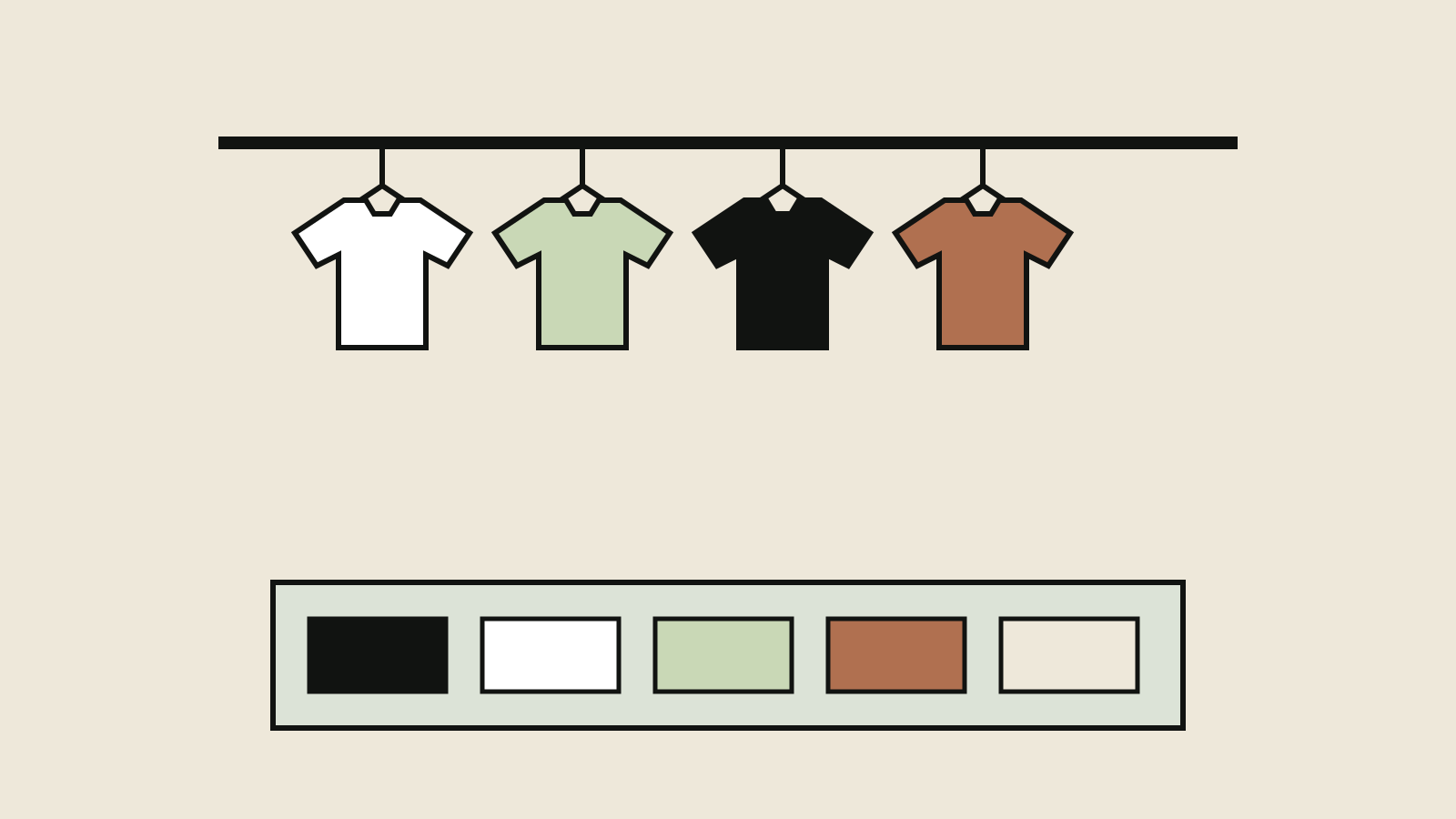
A capsule works because the pieces combine. The easiest way to make sure they do is to choose a small color palette.
Start with two or three base colors for the pieces that do the most work, such as trousers, outerwear and shoes. Black, navy, grey, camel and olive are common choices. Then add two or three accent colors for tops and accessories, chosen to go with every base color.
You can still wear patterns and brighter shades. Just make sure each one goes with most of your base pieces.
The core pieces
Every capsule is different, but most include a version of these pieces:
Tops: a few good T-shirts in neutral colors, a couple of long sleeve tops, a shirt or blouse that can be dressed up, and one or two knit sweaters.
Bottoms: a pair of well fitting jeans, a pair of smart trousers, and either a skirt or a pair of chinos depending on your style.
Layers: a cardigan or overshirt, and one coat suited to your climate.
Shoes: a pair of everyday sneakers, a pair of smarter shoes or boots, and something for warm weather if you need it.
Accessories: a bag that goes with everything, a scarf, and perhaps one watch or piece of jewelry you wear daily.
That is roughly 20 to 30 pieces, which can make dozens of outfits.
Fit and fabric come first
In a small wardrobe, every piece gets worn a lot. That makes fit and fabric more important than in a large one.
Choose pieces that fit well without alteration. A T-shirt that is slightly too short or trousers that are slightly too long will bother you every time you wear them. Our size chart guide explains how to measure and compare.
Choose fabrics that hold up to frequent wear and washing. Heavier cotton jersey, good denim, wool knitwear and sturdy leather or canvas shoes all last well. Our fabric label guide explains what to look for.
Shop for gaps, not for trends
Once you have sorted your closet and chosen a palette, make a list of gaps. Perhaps you have no smart trousers, or your everyday sneakers are worn out, or you need a warmer layer.
Shop only for those gaps, and check each new piece against the rest of your capsule. A good test is whether you can name three outfits with it using what you already own. If you cannot, it may not be right for the capsule.
On Selvane, each product page lists type, material and size range first, so you can check fit and fabric before anything else. Browse Women's Clothing, Men's Clothing and Shoes & Sneakers to compare pieces in each category.
Keep it working
A capsule wardrobe is not fixed. Many people swap a few pieces between seasons, storing summer linens in winter and bringing out knitwear. When something wears out, replace it with the same piece or a better version.
Look after what you have. Washing at lower temperatures, drying flat or on a line, and storing knitwear folded rather than hung all help pieces last longer.
Capsules for different lives
A capsule should match the life you actually live, not an idealized one. Someone who works in an office five days a week needs more smart pieces than someone who works from home. A parent chasing small children needs washable, hard wearing fabrics. Someone who travels often benefits from pieces that do not crease and that pack small.
Before you shop, think about a normal week. Count the days you dress for work, for exercise, for relaxing at home and for going out. Let those numbers guide the balance of your capsule. If most of your week is casual, most of your capsule should be casual too, with only a few smarter pieces for the occasions that need them.
Climate matters as well. In a warm climate, linen and light cotton will do more work than wool. In a cold climate, a good coat, warm knitwear and sturdy boots will be worn far more than summer dresses or sandals.
A simple start
- Sort your closet into love, sometimes and never.
- Pick two or three base colors and two or three accents.
- List the core pieces you already own.
- Write down the gaps.
- Shop for the gaps, checking fit, fabric and outfit options for each new piece.
A wardrobe where everything fits and goes together is not about owning less for its own sake. It is about owning things you actually enjoy wearing, every day.