Size and fabric basics
Fabric labels explained: cotton, wool, linen, polyester and blends
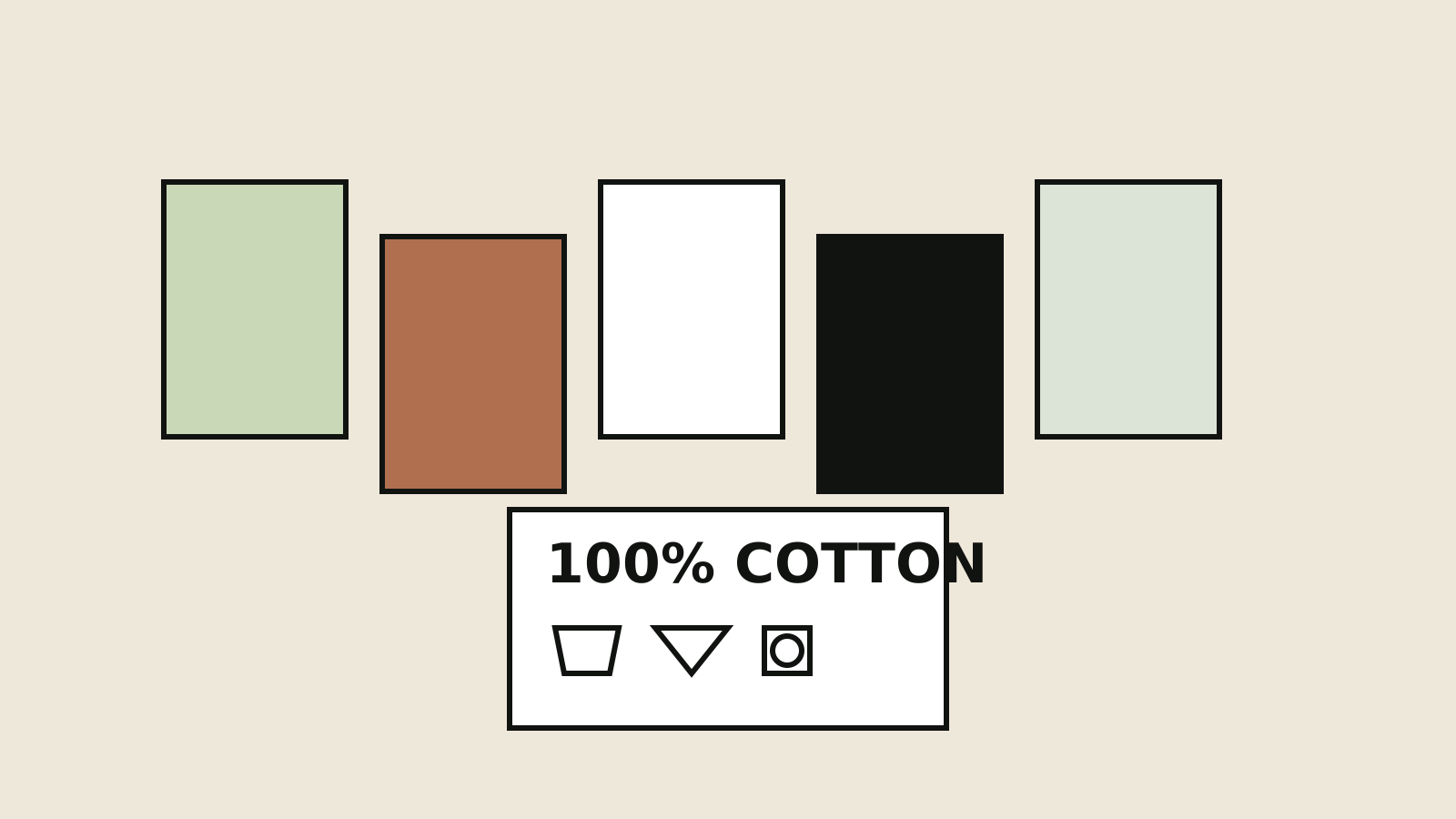
The fabric line is one of the shortest parts of a clothing listing, and one of the most useful. A few words such as "100% cotton" or "70% wool, 30% polyamide" tell you how a piece will feel, how warm it will be, how it will wash and how long it is likely to last.
This guide explains the fibers you will see most often, what blends are for, and how to read the care label that comes with them.
Natural fibers
Cotton is the most common fabric in everyday clothing. It is soft, breathable and comfortable against the skin. It absorbs moisture well, which makes it pleasant in warm weather but slow to dry. Cotton can shrink slightly in the first hot wash. Heavier cottons, such as thick jersey or canvas, hold their shape better than very thin ones.
Within cotton, you will see terms such as jersey, which is the stretchy knit used for T-shirts; twill, which is the diagonal weave used for chinos and denim; and poplin, a smooth, crisp weave for shirts.
Wool is warm, breathable and naturally resistant to odor. It can be worn several times between washes. Fine wools such as merino are soft enough to wear next to the skin, while coarser wools are better for outer layers. Wool needs gentle washing, often by hand or on a wool cycle, and should be dried flat.
Linen is made from the flax plant. It is cool, light and very breathable, which makes it ideal for summer. It creases easily, and that relaxed look is part of its charm. Linen softens with every wash.
Silk is smooth, light and has a natural sheen. It is warm for its weight and drapes beautifully, but it needs careful washing and can mark easily.
Synthetic and semi-synthetic fibers
Polyester is strong, light and quick drying. It holds its shape and color well and rarely creases. On its own it breathes less than natural fibers, so it can feel warm. It is common in activewear and outer layers.
Polyamide, also called nylon, is very strong and stretchy. It is often blended into socks, knitwear and swimwear to add durability.
Elastane, also called spandex, adds stretch. Even a small amount, such as 2 to 5 percent, makes jeans, leggings and fitted tops much more comfortable and helps them recover their shape.
Viscose and modal are made from plant cellulose. They feel soft and drape well, similar to silk, and are common in dresses and blouses. They can shrink or lose shape if washed hot, so follow the care label.
Acrylic is light and warm, often used as a lower cost alternative to wool in knitwear and accessories. It can pill over time.
What blends are for
Many pieces combine two or more fibers. Blends are not a sign of lower quality. They usually aim to combine strengths.
Cotton with a little elastane gives stretch to jeans and T-shirts. Wool with polyamide makes knitwear more durable. Polyester with cotton reduces creasing and speeds up drying. Linen with cotton is softer and creases a little less than pure linen.
The order on the label shows the proportions, with the largest share first.
Fabric weight
Some listings give fabric weight in grams per square meter. A higher number means a heavier, denser fabric. Light T-shirts may be around 140 to 160 grams, while heavy, structured T-shirts can be over 220. Heavier fabrics feel more substantial and are less see-through. Lighter fabrics are cooler.
Reading the care label
The care label uses a set of symbols. The most important ones are:
- A washtub shows how to wash. A number inside is the maximum temperature. A hand means hand wash only. A cross means do not wash.
- A triangle is about bleach. A crossed triangle means no bleach.
- A square is about drying. A circle inside means tumble drying is allowed. A horizontal line means dry flat.
- An iron shows ironing temperature, with dots for low, medium and high heat.
- A circle on its own is about dry cleaning.
Following the care label is the easiest way to keep a piece looking new. Washing at lower temperatures, turning clothes inside out and drying flat or on a line all help colors and shape last longer.
Signs of a well made piece
Fabric is only part of the story. A few construction details also tell you how long a piece will last. Look for even, close stitching with no loose threads. Check that patterns line up at the seams on shirts and dresses. On knitwear, look for neatly finished edges at the cuffs and hem.
Denser fabrics usually last longer than very thin ones, especially in T-shirts and jeans. Buttons should be sewn firmly, and zips should run smoothly. Product photos and listings do not always show these details, so it is worth checking the retailer page for close up images.
Matching fabric to how you live
Choose fabric for the life the piece will have. For everyday basics, cotton and cotton blends are easy and comfortable. For warmth without bulk, wool and merino are hard to beat. For summer, linen and light cotton keep you cool. For workouts, polyester and polyamide blends with elastane dry fast and move with you.
Every product page on Selvane lists the material near the top, so you can compare fabric before you compare price. If it says "Not confirmed", the retailer's listing will have the full composition. Browse Women's Clothing, Men's Clothing and Activewear to compare pieces, and read our size chart guide to get the fit right too.
A few words on a label can tell you more about a piece than any product photo. Reading them is how you build a wardrobe that lasts.